
After Dark with the OM-1: Nights, Stars and Light Painting
At a workshop we had to introduce ourselves and say one thing of interest.
I hate ice-breakers.
I was glad I wasn't first, because I dread trying to think of something interesting to say about myself. A few nights previous I'd been on a late night photography session, so I thought — okay, I'll mention that.
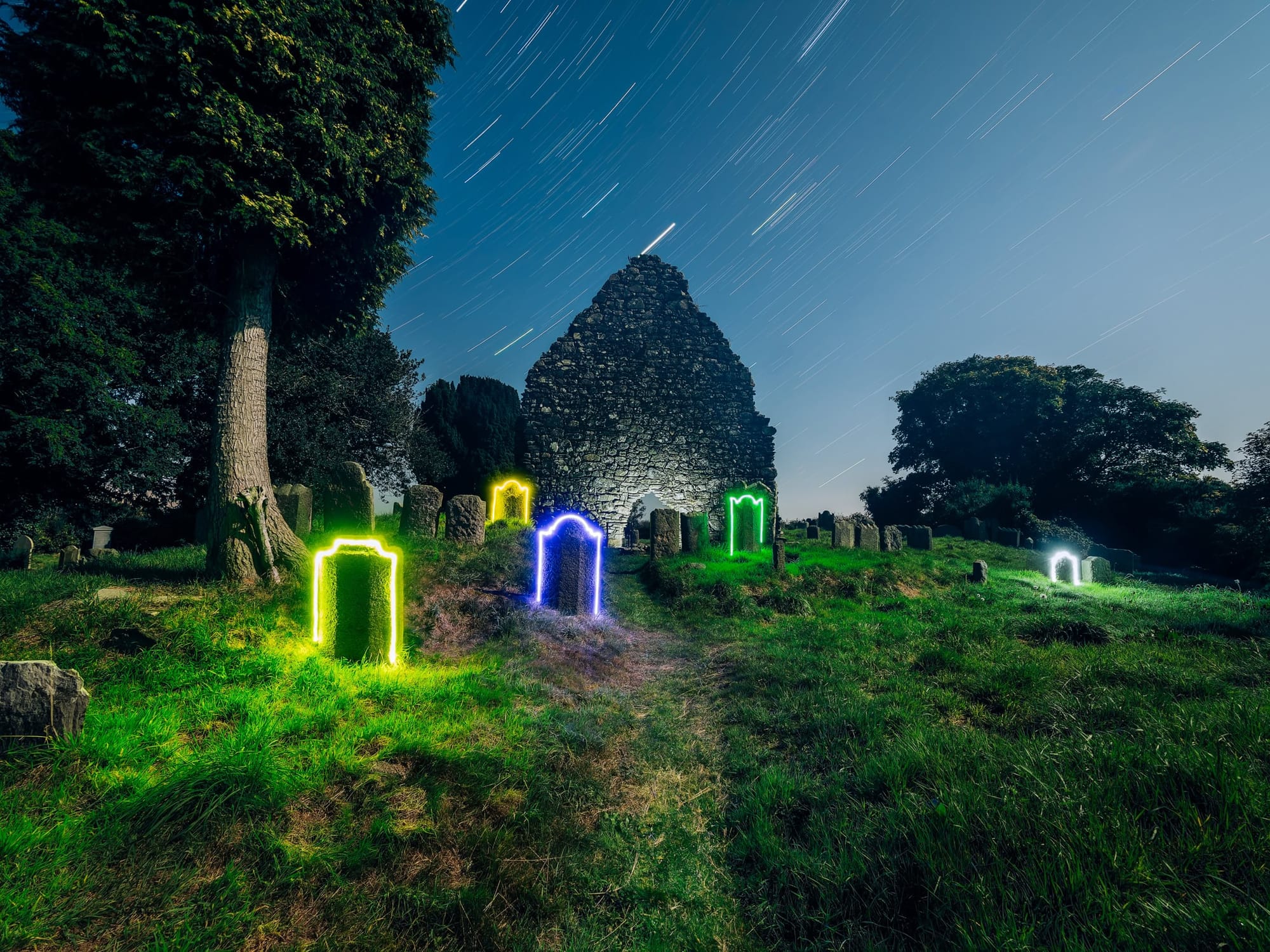
"Hi, my name's Alan, and I love hanging around graveyards at midnight."
There's an opener if you go speed dating.
The workshop facilitator gave me a peculiar look. The room gave me a good laugh. I did have to elaborate: I'm not a grave robber. I don't meet strangers behind headstones. This was about photography.
Why Night Photography Suits the OM-1
When I got serious about photography, I tried every genre going. Street, landscapes, long exposures, abstract. I pointed the camera in every direction to find what clicked.
I went through a few cameras along the way. Some were too big and stayed at home. Some were small enough for holidays but not much else.
When I discovered the OM System OM-1, its technical description felt like it was meant for me. I'd been looking for a camera with computational smarts — iPhone-level processing power in a proper camera body. What I found was a camera that didn't just suit my ambitions. It shaped them.
The features that matter most for nighttime are:
- Live Composite
- Live Time
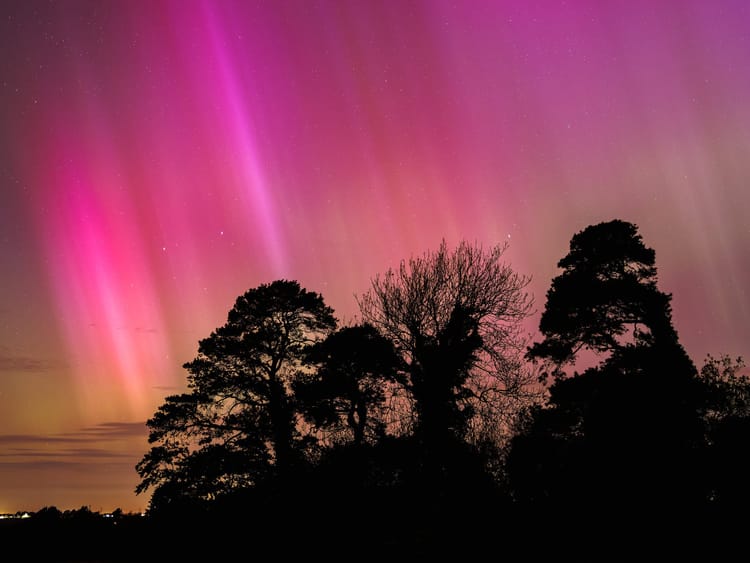
- Starry Sky Autofocus
- High-Resolution modes
There's one more that Northern Ireland insists on: weather sealing. Many OM System lenses and the camera body handle rain without complaint. I can testify to that.
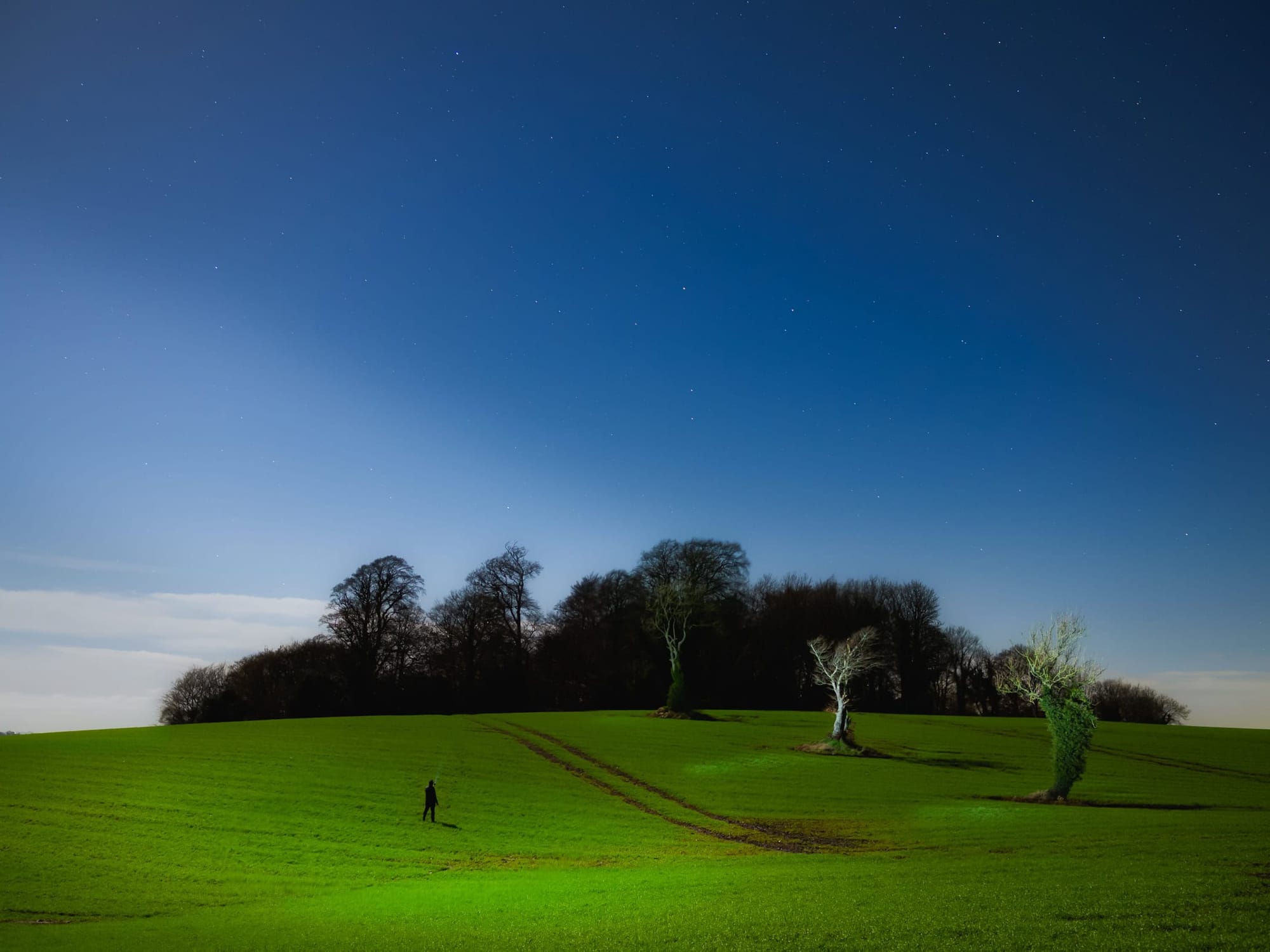
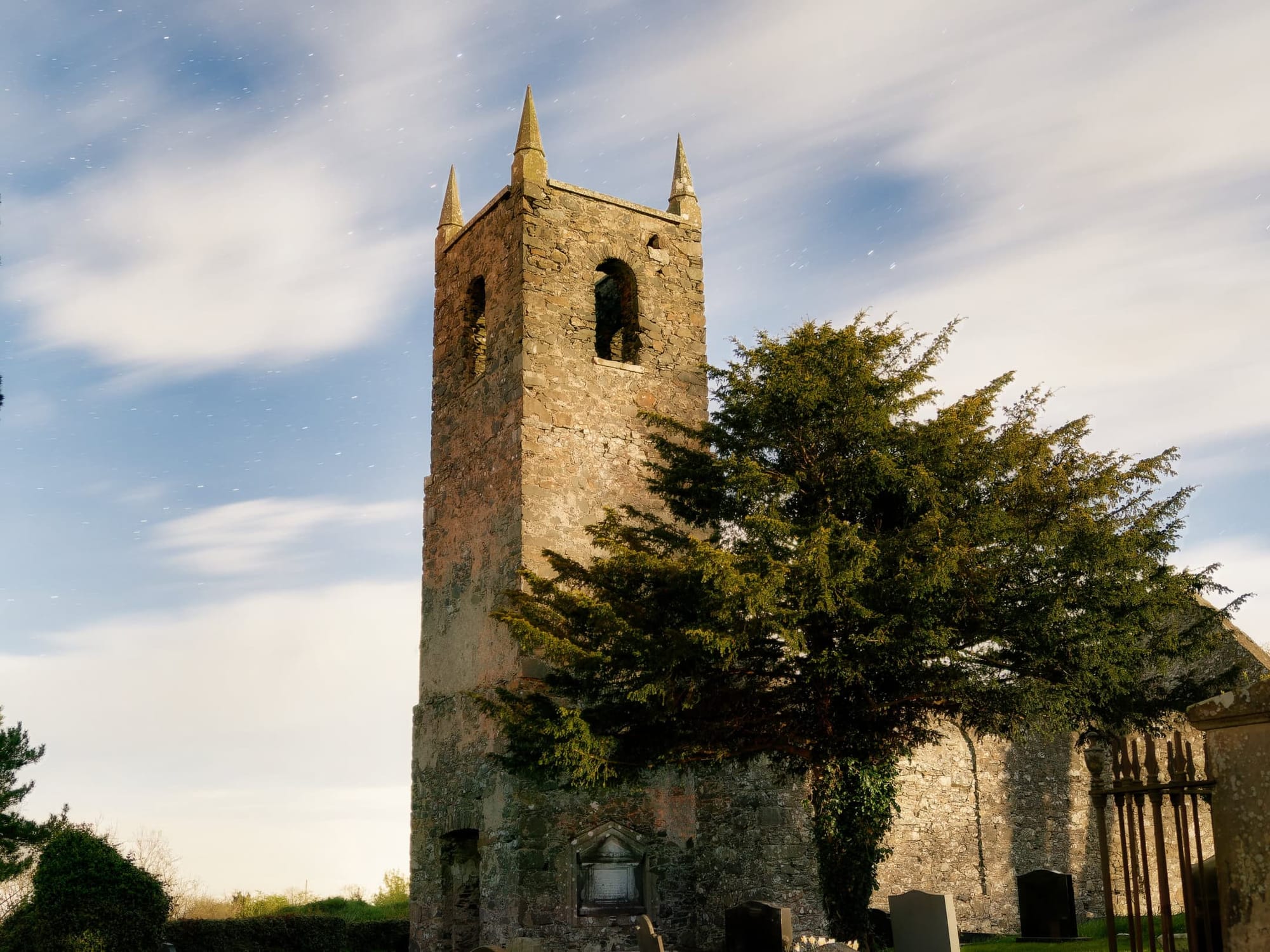
The OM-1 is responsible for my passion for long exposures, night sky, and light painting photography. Because of it, I've stood in the middle of fields at 3:00 AM, visited derelict churches in the small hours, and had beaches entirely to myself in the twilight. I'd smile to myself on those cold, lonely paths, wondering if I was mad.
The Lenses I Reach For After Dark
Another benefit of OM System is the affordability and compact size of the lenses — especially compared to full frame equivalents, which are larger, heavier, and considerably more expensive. It did lead to a lens addiction which I continue to battle with.
My three go-to lenses for night work:
8mm f/1.8 Fisheye Pro — I resisted this one for years. Now I love it. Wide sky coverage, ideal for star trails, and that f/1.8 sucks in whatever light is available. The distortion can be a creative feature, and it can be corrected in post if you prefer.
12mm f/2.0 — Not weather sealed, but wide and excellent for light painting compositions where I want environmental context. When it's raining, I'm not out anyway.
17mm f/1.2 Pro — My most-used lens at night. Wide enough to capture the scene, but keeps the subject matter well-framed. That f/1.2 aperture is remarkable in the dark.
The Features That Make the OM-1 Shine at Night
All photography has its challenges. Computational features help, but they don't remove the learning curve. I discover something new on every trip.
Live Composite
Live Composite is the feature that sold me the camera. It builds an exposure frame by frame, only adding new light — so a painted torch trail builds beautifully while your background stays correctly exposed. No guesswork. No overblown city lights. Magic.
Live Time
Live Time works differently. It holds a single long exposure open and lets you watch the image develop on screen in real time. No need to guess whether thirty seconds is too little or too much. You can see it happening and close the shutter when you're happy.
Watching a moonlit ruin slowly appear on screen feels a little like developing film in a darkroom. Slow, deliberate, and satisfying.
Starry Sky Autofocus
Focusing in the dark is one of night photography's oldest frustrations — or so I'm told. The OM-1's Starry Sky AF detects and locks onto stars, something standard autofocus simply can't do. Point it at the sky, let it find its mark, and shoot. I've watched other photographers explain their manual star-focusing routines on YouTube. I've had a quiet laugh.
High-Resolution Mode
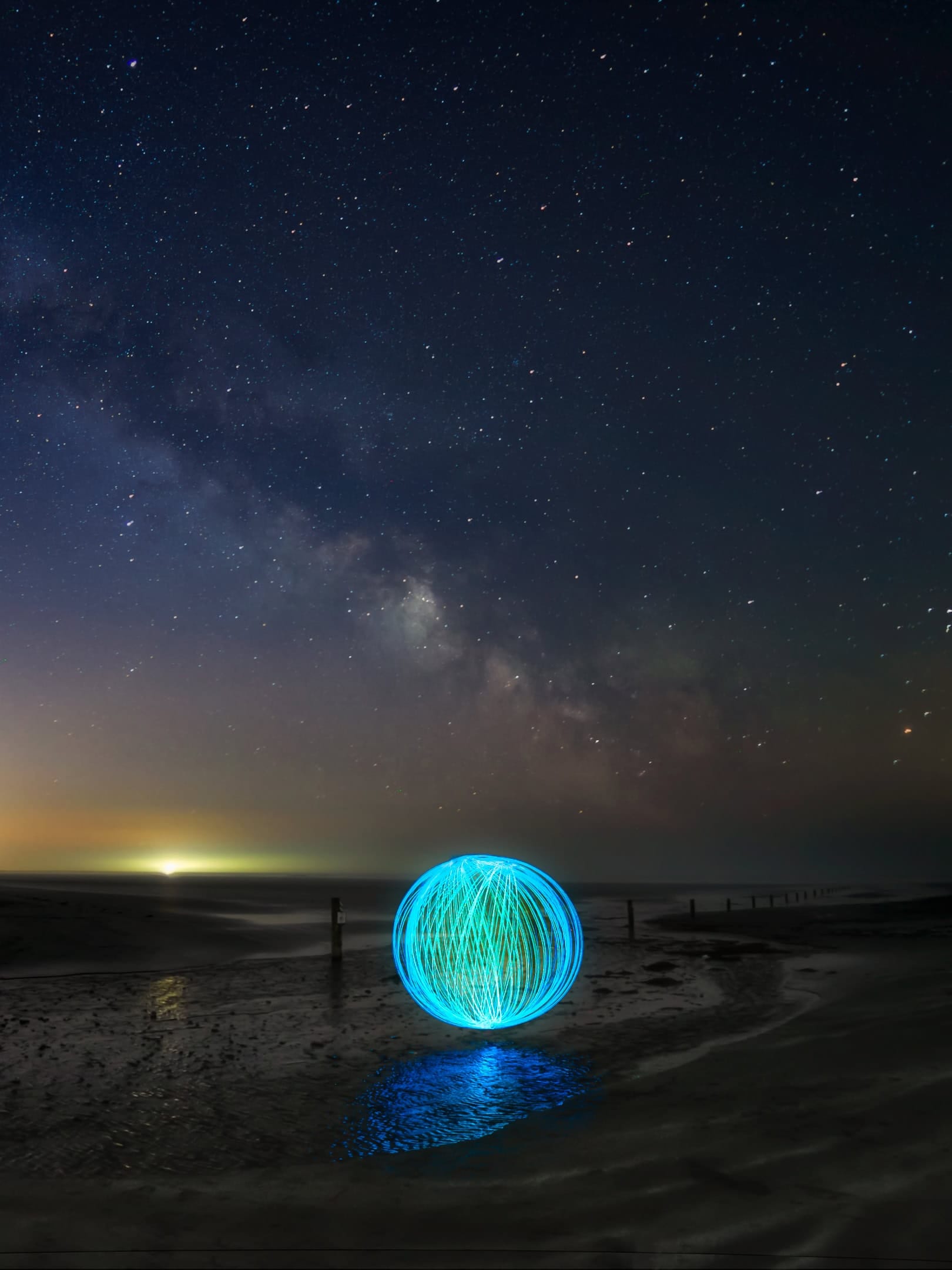
High-Res Shot mode takes a rapid burst of frames and merges them into a single image — 50MP handheld, or 80MP on a tripod. For night sky photography, using handheld High-Res mode on a tripod is a game-changer. The camera takes twelve shots and stacks them in-camera, producing a clean, noise-free result without a tracker. I've used it for Milky Way shots when I couldn't face setting up a tracker. It works.
Tip: For best results, shoot the sky and foreground separately and blend them in post.
One caveat: anything moving — windblown treetops, passing clouds — will blur.
Light Painting with the OM-1 — What Works?
Live Composite and fast glass make light painting genuinely relaxing. You watch the painting build on screen in real time, with no pressure to finish before a single shot overexposes.
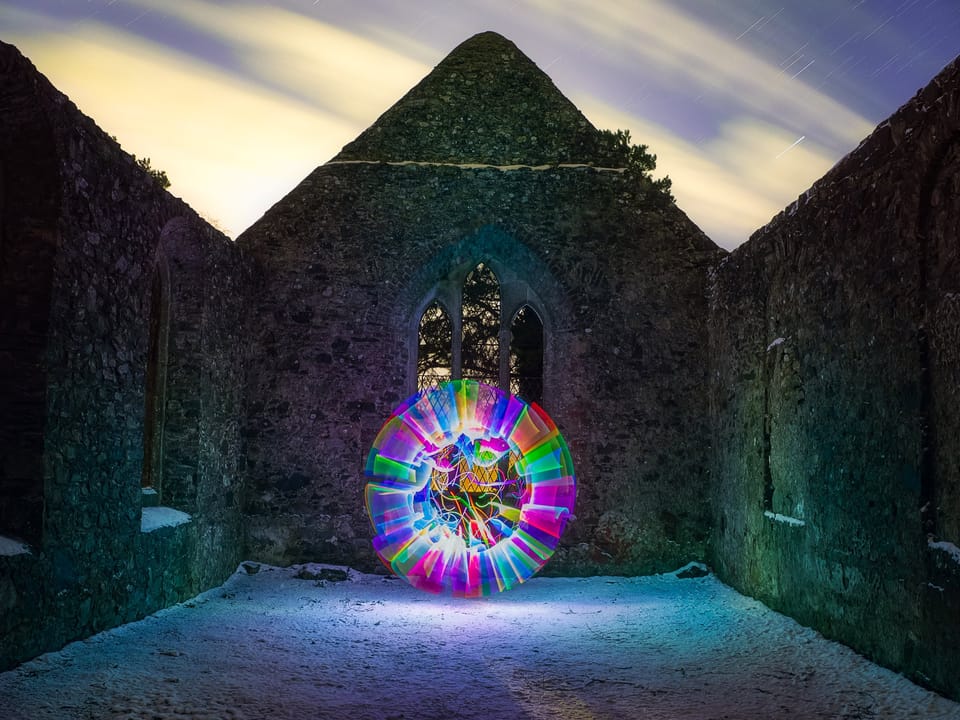
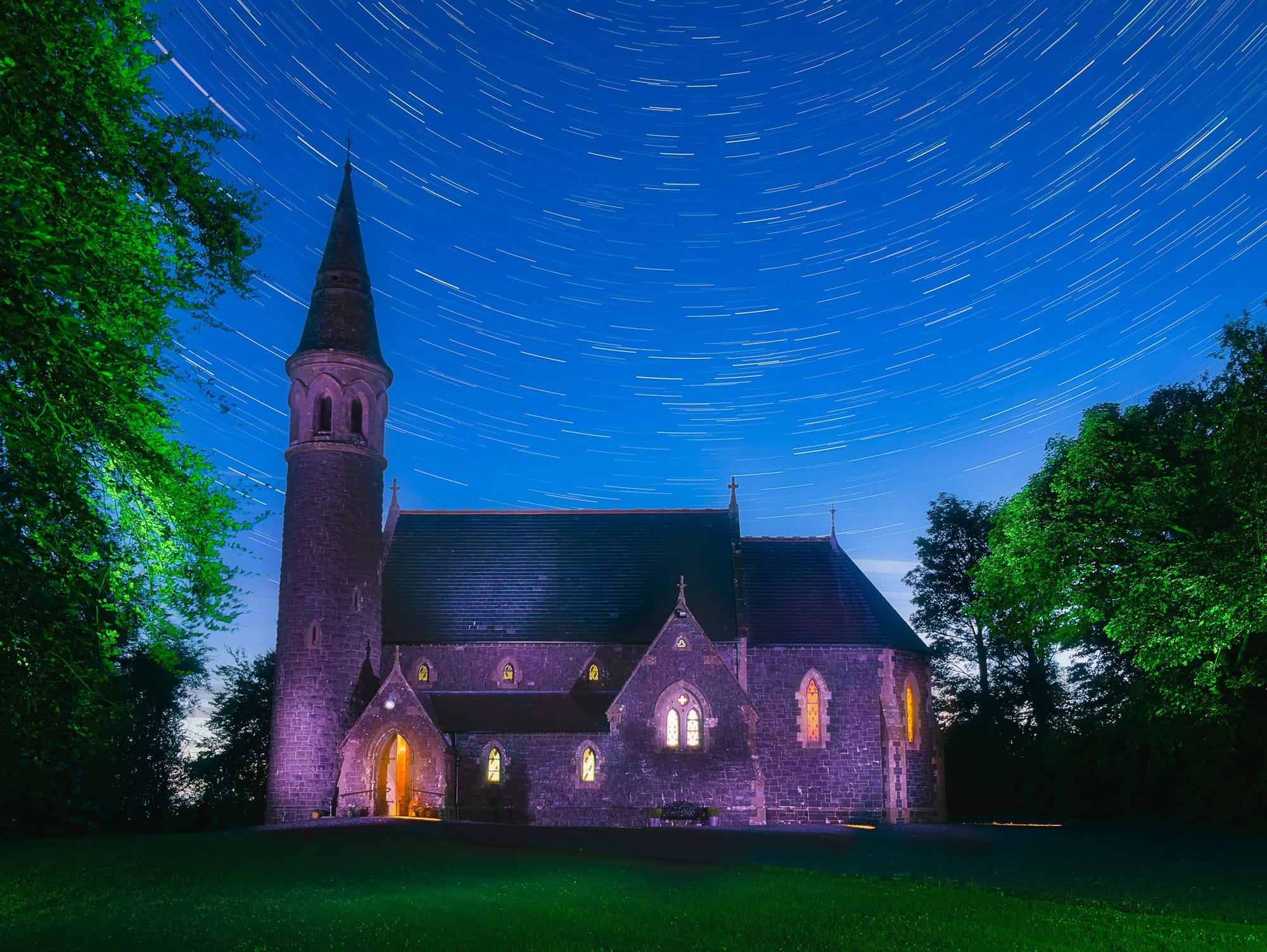
I take the base shot at the correct exposure, start Live Composite, and then I have all the time I need. Torches, orb tool, a lightsaber, coloured gels — whatever takes my fancy. I can paint buildings at my leisure, create effects, and enjoy the night. Stars will trail if the session runs long. I love that. If I don't want trails, I take a separate sky exposure and blend the two.
I'll be honest — computational features make this more approachable than it used to be. But there's still a learning curve. The image below required three separate shots: one sky, and two attempts at the foreground to get the best bits. Photoshop helped finish the job.
Pros and Cons
| Pros | Cons |
|---|---|
| Live Composite makes light painting foolproof | Live Composite can't recover a ruined frame mid-session; you have to start over |
| Weather-sealed body handles damp, cold conditions | Computational features drain batteries quickly |
| Starry Sky AF usually guarantees sharp stars | In-camera noise reduction doubles exposure time |
| High-Res mode reduces reliance on a tracker | High-Res needs 80% sky to avoid star trails |
| Live Time removes the guesswork from long exposures | The EVF is a further battery drain |
A Word on Micro Four Thirds and Low Light
There's a persistent concern in some corners of the photography world that Micro Four Thirds can't handle low light the way full frame can. It may have a grain of truth at extreme ISOs, but in practice it has never troubled me. OM System's built-in noise reduction handles hot pixels and most noise issues in-camera. When it doesn't, software like Lightroom or DXO’s PureRaw finishes the job.
If sensor size is putting you off shooting at night with an OM System camera, don't let it. Compact, lightweight gear will take you places you'd never drag a full frame kit. That trade-off is worth it.
Two Sources That Inspired Me
You know when you hear a song and it makes the hairs stand up on the back of your neck? It happened to me the first time I heard Electric Light Orchestra’s Mr Blue Sky. It also happened twice in photography.
The first was Denis Smith and his School of Light on YouTube. Denis creates orbs of light in beautiful surroundings, and the moment I saw it I knew — that's what I want to do. Placing a glowing orb in an ancient or natural setting feels almost spiritual. Meditative, even.
The second was a video by Jamie Windsor exploring creative long exposure photography — not the usual kind. Jamie takes you through photographers who make crowds disappear, conjure ethereal moonlit landscapes, and bend reality with light. I've kept it in my Watch Later list and revisit it several times a year.
Key Takeaway
The OM System OM-1 doesn't guarantee great nighttime photographs. Nothing does. But it gets out of your way, handles the technical heavy lifting, and lets you focus on the things that matter — the composition, the cold air, the quiet, and the torch in your hand.
Or the one on your head.
Something more on Live Composite...
 Alan Marsden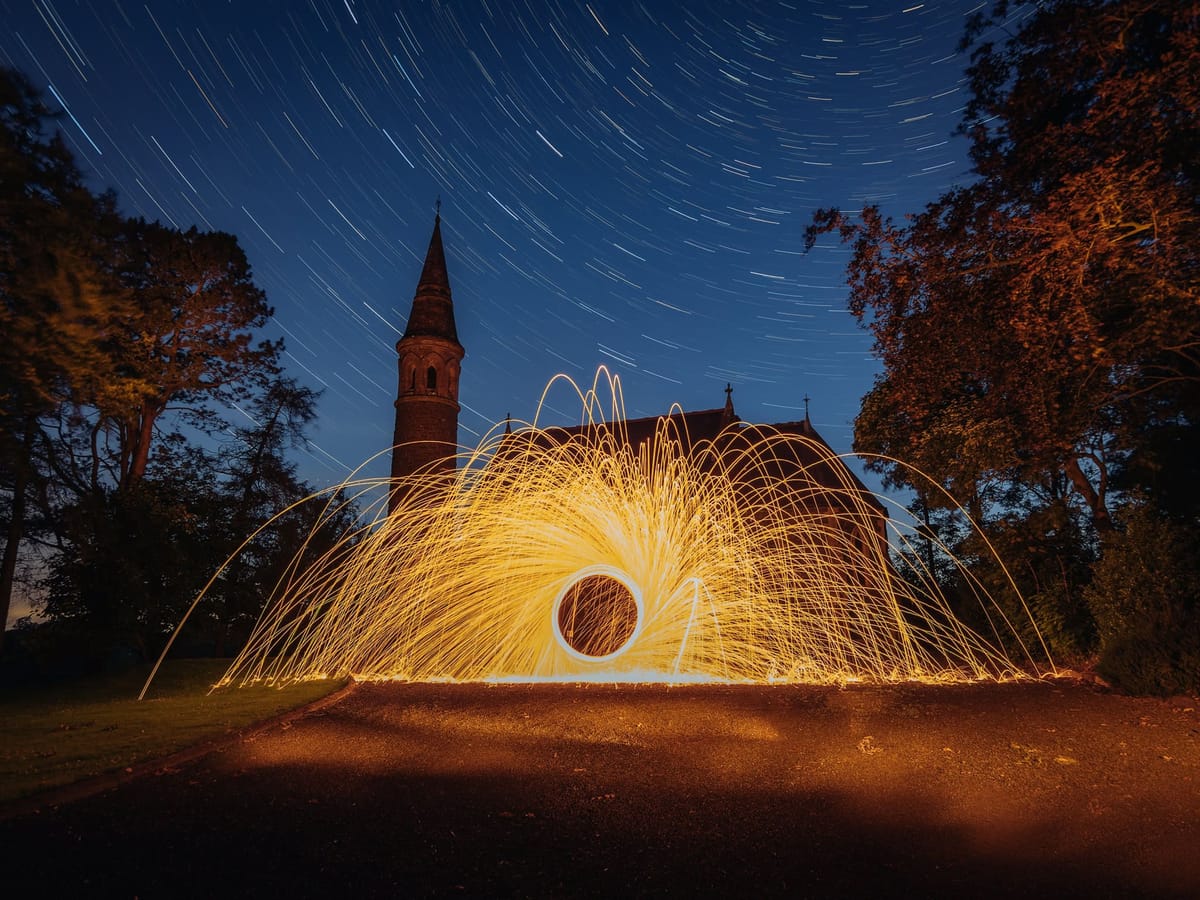
Thanks for reading this far. If you found this story helpful, please consider buying me a coffee. It would mean so much. 😊